Professional currency trading in the world's largest and most liquid financial market, generating consistent profits through strategic forex operations.
The foreign exchange market, commonly known as Forex or FX, is the largest financial market in the world with over $7.5 trillion traded daily. At Real-Assets247, we leverage this massive liquidity and 24-hour market access to generate profits for our clients through strategic currency trading.
Forex trading involves buying one currency while simultaneously selling another, capitalizing on fluctuations in exchange rates between currency pairs. Unlike stocks or real estate, the forex market operates continuously five days a week across global financial centers, providing constant opportunities to profit from currency movements.
Our experienced forex traders monitor economic indicators, central bank policies, geopolitical events, and technical patterns to identify profitable trading opportunities across major, minor, and exotic currency pairs. We employ sophisticated risk management and position sizing to protect capital while capturing significant returns from currency volatility.

With over $7.5 trillion in daily trading volume, forex is the most liquid market globally. This ensures tight spreads, instant execution, and the ability to enter or exit positions at any time without slippage.
The forex market operates 24 hours a day, five days a week, moving seamlessly across major financial centers from Sydney to Tokyo, London, and New York, creating continuous trading opportunities.
Forex trading allows for leveraged positions, enabling control of large positions with relatively small capital. When used prudently, leverage amplifies returns while maintaining strict risk controls.
Unlike traditional stock investing, forex traders can profit whether currencies rise or fall. Going long on appreciating currencies or short on depreciating ones provides flexibility in all market conditions.
Forex trading typically involves minimal transaction costs with tight bid-ask spreads and no commission fees on most currency pairs, maximizing net returns on successful trades.
Trade major currency pairs like EUR/USD, exotic pairs from emerging markets, or commodity currencies, offering diverse opportunities across different economic regions and conditions.
The most heavily traded pairs involving the world's strongest economies. These pairs offer the highest liquidity, tightest spreads, and most predictable price movements, making them ideal for both short-term and long-term strategies.
Euro vs US Dollar - Most traded pair globally
British Pound vs US Dollar - "Cable"
US Dollar vs Japanese Yen
US Dollar vs Swiss Franc
Also known as cross-currency pairs, these don't involve the US Dollar but still represent major economies. They offer good liquidity and opportunities for diversification beyond dollar-denominated trades.
Euro vs British Pound
Euro vs Japanese Yen
British Pound vs Japanese Yen
Australian vs New Zealand Dollar
Pairs involving currencies from emerging economies. While offering wider spreads and lower liquidity, these pairs can provide exceptional profit opportunities due to higher volatility and less efficient pricing.
US Dollar vs Turkish Lira
US Dollar vs South African Rand
US Dollar vs Mexican Peso
Euro vs Turkish Lira
Currencies from resource-rich nations that correlate with commodity prices. These pairs provide opportunities to capitalize on energy and commodity market movements through currency trading.
Australian Dollar - Gold correlation
Canadian Dollar - Oil correlation
New Zealand Dollar - Dairy correlation
Interest rate decisions, monetary policy statements, and quantitative easing programs from central banks like the Federal Reserve, ECB, and Bank of Japan significantly impact currency values and create major trading opportunities.
GDP growth, employment figures, inflation rates, manufacturing data, and consumer confidence reports influence currency strength. We closely monitor economic calendars to anticipate market-moving releases.
Elections, trade agreements, political instability, international conflicts, and Brexit-type events create volatility and directional moves in currencies, presenting both risks and opportunities for strategic traders.
Risk appetite and risk aversion cycles drive flows between safe-haven currencies (USD, JPY, CHF) and higher-yielding currencies. Understanding sentiment shifts helps predict currency movements.
Countries with trade surpluses typically see currency appreciation, while persistent deficits can weaken currencies. We analyze trade flow data to identify long-term currency trends.
Oil, gold, and other commodity prices strongly influence commodity currencies. Rising oil prices typically strengthen CAD and NOK, while gold prices correlate with AUD and gold-producing nations' currencies.
Our systematic approach to professional currency trading and profit generation
Our trading day begins with comprehensive analysis of global markets. We monitor economic calendars for scheduled data releases, central bank announcements, and geopolitical developments that could impact currency values.
We employ fundamental analysis to understand the macroeconomic forces driving currency movements - analyzing interest rate differentials, GDP growth rates, inflation trends, and political stability across countries.
Simultaneously, our technical analysts study price charts, identify support and resistance levels, recognize chart patterns, and use indicators like moving averages, RSI, and MACD to pinpoint optimal entry and exit points.

Based on our analysis, we develop specific trading strategies tailored to current market conditions. For trending markets, we employ trend-following strategies, entering positions aligned with the prevailing direction.
In ranging markets with no clear trend, we use range-trading strategies, buying at support levels and selling at resistance. We also employ breakout strategies when currencies consolidate before major moves.
For major economic events like central bank announcements, we position ourselves ahead of expected movements or use post-event volatility to capture rapid price swings with precise timing.
When our analysis identifies a high-probability trading opportunity, we execute trades through institutional-grade trading platforms connected to multiple liquidity providers, ensuring best execution prices and minimal slippage.
Each trade includes predetermined stop-loss orders to limit potential losses and take-profit targets to lock in gains. We calculate position sizes based on account size and risk tolerance, never risking more than a small percentage of capital on any single trade.
Our traders operate across different time zones, ensuring 24-hour market coverage. This allows us to capitalize on opportunities in Asian, European, and American trading sessions, responding instantly to market developments.
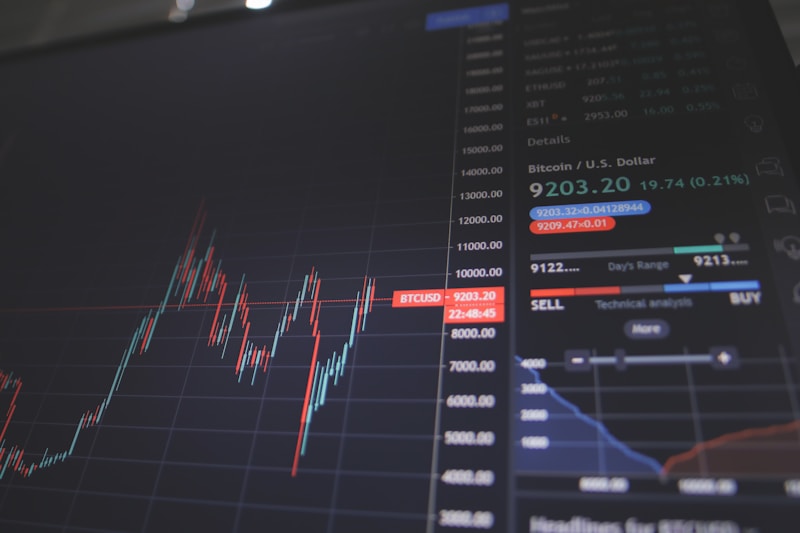

Once positions are open, we actively monitor them throughout the trading day. We track price movements in real-time, watch for technical signals, and remain alert to breaking news that could impact our positions.
As trades move in our favor, we often adjust stop-loss orders to breakeven or profit levels, creating "risk-free" positions. We may also scale out of positions, taking partial profits while letting remaining portions run toward larger targets.
For swing trades held over multiple days, we analyze daily closes and adjust positions based on evolving market structure, always maintaining disciplined risk management protocols.
Risk management is paramount in forex trading due to leverage and volatility. We never risk more than 1-2% of total capital on any single trade, ensuring that even a series of losses won't significantly impact overall portfolio value.
We maintain strict maximum drawdown limits and reduce position sizes or pause trading if losses approach predetermined thresholds. Diversification across multiple currency pairs prevents overexposure to any single currency.
Our risk systems automatically close positions if margins approach critical levels, and we avoid trading during extremely volatile periods like major unexpected geopolitical events unless risk/reward is exceptionally favorable.

Multiple proven strategies to capture returns from currency market movements and deliver consistent profits
The fundamental way we profit in forex is by buying currencies we expect to strengthen and selling those we expect to weaken. When we buy EUR/USD at 1.1000 and it rises to 1.1200, we capture the 200-pip gain as profit.
Every currency pair movement creates opportunity. If analysis suggests the Euro will strengthen against the Dollar due to ECB policy or economic growth, we take long EUR/USD positions. Conversely, if the Dollar appears stronger, we short EUR/USD to profit from Euro weakness.
When we hold positions overnight or longer, we earn or pay swap rates based on interest rate differentials between currencies. By buying higher-yielding currencies against lower-yielding ones, we earn daily interest credits on top of potential capital gains.
For example, if we buy AUD/JPY (Australian Dollar yielding 4% vs Japanese Yen yielding 0.1%), we earn positive swap every night we hold the position, generating steady income alongside any currency appreciation.
We execute numerous short-term trades capturing small price movements of 5-20 pips multiple times per day. While individual gains are modest, the cumulative effect of many successful trades generates substantial profits.
During high-liquidity periods like London-New York session overlap, volatility creates frequent trading opportunities. Our scalpers use tight spreads on major pairs to execute dozens of profitable trades daily with minimal risk exposure.
For larger moves, we hold positions over several days or weeks to capture significant trends. Major currency movements of 200-500 pips or more can generate substantial returns, especially when utilizing appropriate leverage.
When strong fundamental drivers indicate a sustained trend (like central bank policy divergence or major economic shifts), we position for longer-term moves, maximizing profit potential while managing overnight risks.
ECB signals rate hike while Fed pauses increases. Euro shows technical breakout above 1.0950 resistance. Strong uptrend momentum confirmed.
*This example demonstrates a typical swing trade. Results vary based on market conditions, leverage used, and risk management parameters.
Major economic announcements like Non-Farm Payrolls, GDP releases, or central bank decisions create explosive volatility. We position before expected moves or trade the immediate aftermath, capturing rapid 50-100 pip movements within minutes.
By analyzing consensus forecasts versus actual results and understanding how different data impacts currencies, we profit from the market's rapid repricing following major announcements.
We systematically borrow low-yielding currencies and invest in high-yielding currencies to capture interest rate differentials. This strategy generates consistent income from daily swap credits while also benefiting from favorable currency movements.
In stable market conditions, carry trades deliver steady returns with relatively low volatility, making them excellent for longer-term profit generation.
When currencies trade sideways within defined ranges, we repeatedly buy at support levels and sell at resistance. This strategy is particularly effective during low-volatility periods or when markets await major catalysts.
By identifying reliable support and resistance zones through technical analysis, we execute multiple profitable round-trips within the same range, accumulating steady gains.
Strong trends driven by fundamental factors can persist for months. We identify these trends early using technical indicators and fundamental analysis, then ride them for maximum profit, adding to winning positions as trends strengthen.
Major currency trends during periods of significant economic divergence or policy changes can deliver hundreds or thousands of pips, generating exceptional returns for patient traders.
After periods of consolidation, currencies often experience explosive breakouts as pent-up energy releases. We identify these consolidation patterns and enter positions as prices break through key levels, capturing rapid directional moves.
Successful breakout trades can deliver quick profits of 100+ pips within hours as momentum traders pile into the new direction and stop losses are triggered.
We protect existing positions and reduce risk by taking offsetting positions in correlated pairs. This allows us to maintain profitable positions while limiting downside risk during uncertain periods or major events.
Strategic hedging also enables us to profit from relative currency movements while neutralizing absolute directional risk, generating returns even in choppy, directionless markets.
Access professional forex trading and benefit from the world's largest financial market
Explore Investment Options